


 Candice Tillman
The B2B data industry spent years competing on one thing: size. Every platform wanted to claim the biggest contact database. Hundreds of millions of records. Endless exports. Massive global coverage. For a while, that strategy worked.
Then sales teams started noticing something frustrating. Huge databases often created huge cleanup problems, too.
An SDR exports five thousand contacts, then spends half the day removing outdated emails, irrelevant companies, dead phone numbers, and generic inboxes before outreach even begins. At some point, the question changes from:
“How many contacts does this platform have?”
to:
“How much of this data can we actually use?”
That shift is one reason human-verified data became much more important over the last few years. Not every provider approaches data quality the same way. Some focus heavily on scale and automation. Others lean more into verification, filtering, and manual review.
The differences become obvious quickly once campaigns start running.
1. Emarketnow prioritizes verification over raw database size
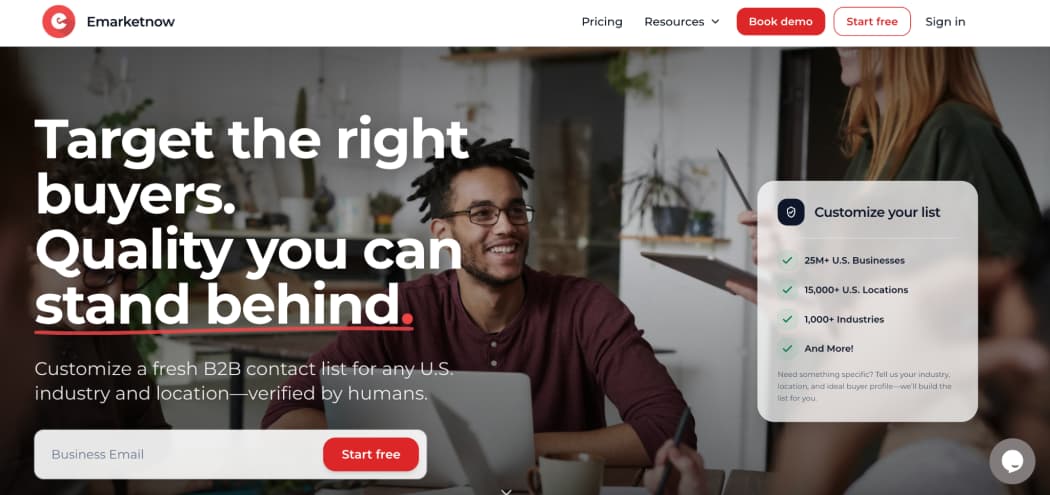
Most large B2B databases rely heavily on automation.
Emarketnow approaches prospecting data differently.
Instead of simply pulling from massive recycled datasets, the company builds lists based on the industries and targeting filters that customers actually request. The workflow leans heavily into manual verification before contacts ever reach the final export.
That includes:
- Reviewing direct work emails
- Filtering out catch-all domains
- Removing generic inboxes like info@
- Validating mobile numbers
- Checking company relevance manually
That last part matters more than many outbound teams expect.
A lot of large databases categorize companies broadly because maintaining precision across millions of records becomes a difficult operation. Someone searching for construction companies suddenly receives suppliers, distributors, and unrelated service businesses mixed into the export.
Emarketnow focuses much more heavily on narrowing those overlaps.
That quality-first workflow is one reason some sales teams increasingly prefer using human-verified B2B data instead of relying only on giant automated databases.For smaller outbound teams, especially, cleaner data often creates faster workflows than massive exports requiring endless filtering afterward.
2. ZoomInfo dominates on scale, but smaller teams often struggle with cleanup
ZoomInfo remains one of the biggest names in B2B data. The platform focuses heavily on enterprise-scale prospecting and sales intelligence.
Its ecosystem includes:
- Company intelligence
- Org charts
- Intent signals
- Technographic filtering
- Enterprise integrations
- Large-scale enrichment
For enterprise sales organizations, that depth can be extremely valuable.
At the same time, smaller outbound teams sometimes find the platform heavier than they actually need. Large exports often require additional filtering before campaigns launch, especially when teams target narrow verticals or local industries.
That is where verification-focused providers tend to feel cleaner operationally.
3. Apollo gives huge volume, though volume creates inconsistency too
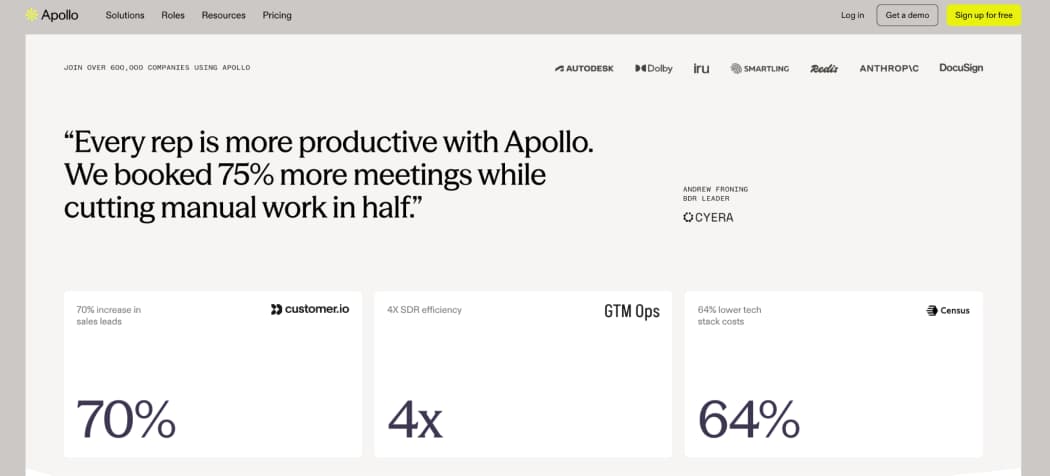
Apollo became extremely popular among startups and SMB outbound teams because it combines prospecting and outreach inside one system.
The platform includes:
- Massive contact database
- Outreach sequencing
- CRM integrations
- Prospect enrichment
- Browser extension workflows
Apollo’s biggest advantage is accessibility. Teams can launch outbound campaigns quickly without stitching together multiple tools.
The tradeoff is that extremely large databases naturally create more inconsistencies over time. Some sales teams love the scale. Others spend additional time validating exports manually before launching campaigns.
That balance between scale and accuracy became one of the biggest conversations inside outbound prospecting recently.
4. Cognism focuses heavily on verified mobile data
Cognism positioned itself differently from many US-focused databases by emphasizing compliance and phone-verified contact information.
The platform focuses heavily on:
- Mobile number verification
- International coverage
- GDPR-focused workflows
- Buyer intent signals
- Sales integrations
Compared to broader prospecting systems, Cognism appeals strongly to teams prioritizing cold calling workflows and international outreach.
The company also pushes verification much harder than many purely scale-focused competitors.
That difference matters more now because outbound workflows have become increasingly sensitive to bad data quality.
5. UpLead built its reputation around cleaner verified exports
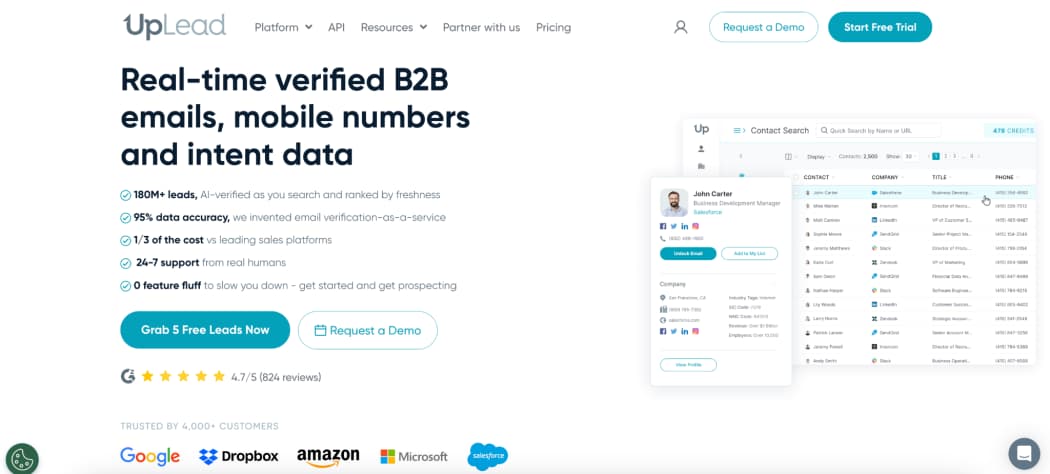
UpLead became popular partly because the company leaned directly into the “accuracy problem” inside B2B prospecting.
The platform emphasizes:
- Real-time email verification
- Cleaner exports
- Targeted filtering
- CRM integrations
- Technographic search
Compared to heavier enterprise systems, UpLead feels more streamlined and SMB-friendly.
A lot of smaller outbound teams prefer that approach because they care less about exporting huge lists and more about whether the contacts actually remain usable when campaigns launch.
That distinction is becoming more important across the industry overall.
Why sales teams became skeptical of giant databases
Large databases naturally decay over time.
People switch jobs constantly. Companies restructure. Offices close. Phone numbers stop working. Entire businesses quietly disappear while stale records continue circulating inside prospecting systems months later.
That creates problems everywhere:
- Higher bounce rates
- Poor deliverability
- Weak segmentation
- Lower reply rates
- SDR inefficiency
- CRM clutter
A few years ago, many teams tolerated weaker data quality because outbound systems were less strict.
That changed. Now, even moderately poor data can hurt sender reputation and future campaign performance.
Why clean data affects more than bounce rates
Most companies think weak data only creates email deliverability problems. The impact is usually much larger.
Poor prospecting data affects:
- SDR productivity
- CRM quality
- Personalization
- Reply rates
- Pipeline efficiency
- Outreach confidence
When reps stop trusting exported contacts, workflows slow down immediately. Teams begin double-checking LinkedIn profiles, company websites, and email formatting manually before outreach even starts.
That hesitation quietly kills productivity.
Massive databases are not disappearing, but buying behavior is changing
Enterprise organizations still rely heavily on large-scale prospecting systems. That is unlikely to change anytime soon.
At the same time, many SMB and mid-market sales teams are evaluating providers differently now.
Instead of prioritizing maximum volume alone, they increasingly care about:
- Accuracy
- Freshness
- Verification
- Lower cleanup time
- Better segmentation
- Cleaner deliverability
That shift explains why more verification-focused providers started gaining attention recently. Especially among lean outbound teams, where wasted SDR time becomes expensive quickly.
Cleaner data usually creates faster outbound workflows
Most sales teams do not actually need endless exports. They need usable exports.
A giant database loses value quickly if reps constantly question whether the records are accurate. The strongest providers today are not necessarily the companies with the biggest numbers attached to their marketing pages. Increasingly, they are the platforms helping outbound teams spend less time fixing data and more time actually prospecting.
Some providers focus heavily on enterprise infrastructure and scale. Others prioritize verification and targeting quality. Emarketnow stands out because the workflow leans strongly into manual review, industry relevance, and cleaner filtering instead of competing purely on raw database volume.
For many outbound teams in 2026, trust in the data matters more than database size alone.