


 Candice Tillman
Here is something that slows down most SaaS platforms. Two different providers. Two different contracts. Two different integration schedules. One for bank data. One for bank payments.
That separation creates headaches. Data arrives in one format. Payments live somewhere else. Reconciliation turns into a mess of spreadsheets and manual work.
The five unified API firms on this list solve that problem. Each open banking infrastructure company offers one API that handles both Account Information Services (AIS) and Payment Initiation Services (PIS) in a single integration.
1. Finexer
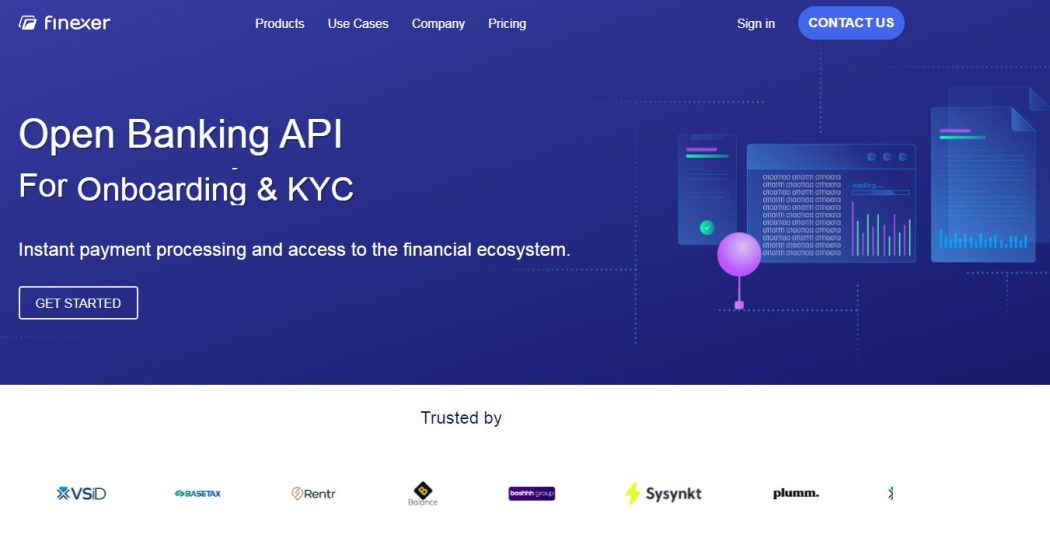
Finexer provides Open Banking infrastructure for UK SaaS platforms that need AIS and PIS capabilities through a single integration.This unified API firm covers real-time transaction data, Pay by Bank payments, and verification workflows in a single integration.
What makes Finexer different on AIS:
- 99% UK bank coverage, including Barclays, HSBC, Monzo, and Starling
- Real-time transaction feeds with merchant and expense categorisation
- Structured bank data designed to support accounting, reconciliation, and compliance review workflows
What makes Finexer different on PIS:
- Pay by Bank payments that help platforms reduce reliance on card networks
- Bulk payout processing for payroll, invoicing, and supplier payments
- White label consent journeys with full HTML and CSS customisation
Bank coverage snapshot: 99% of UK current accounts reachable through a single API call.
Customer evidence: Sysynkt and VSiD both published testimonials praising Finexer’s collaborative approach and flexible commercial packages.
Where Finexer focuses: Accounting, ERP, lawtech, EPOS, payroll, proptech, and utility billing platforms.
The catch for now: UK only. No international bank connectivity.
2. Plaid
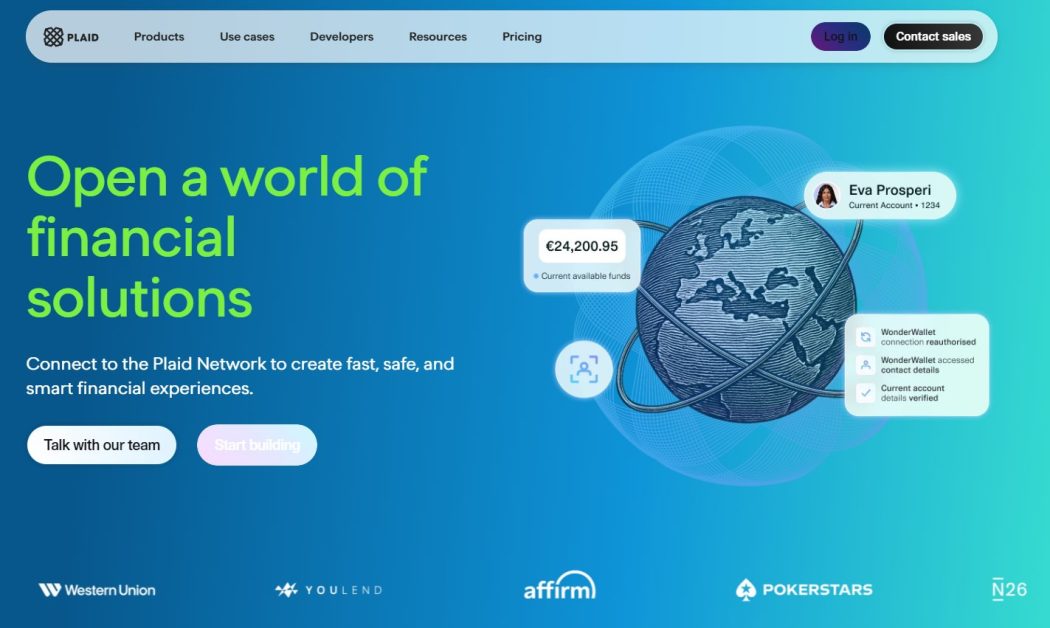
Plaid calls themselves the gold standard for account linking. This AIS and PIS provider connects to over 12,000 financial institutions across 20 markets, including the UK and Europe. The unified API gives you AIS for transaction data and PIS for moving money.
What makes Plaid different on AIS:
- Cash flow data enriched with merchant and category insights
- Real-time balance checks and transaction history
- Identity verification tied directly to funded accounts
What makes Plaid different on PIS:
- Low-cost instant payments with balance checks before processing
- Payment initiation across multiple European markets from one integration
- Fraud detection built into the payment flow
Bank coverage snapshot: 12,000+ institutions across North America and Europe.
Customer evidence: Moneybox uses Plaid for high-speed, low-fee payments. Western Union powers faster payments through their network. YouLend boosted loan approval rates using Plaid data.
Where Plaid focuses: Consumer lending, digital wallets, investment apps, and personal finance management.
The catch: Their pricing is not public. You request a custom quote.
3. Tink
Tink started in Sweden and now covers thousands of banks across Europe. The open banking data company was acquired by Visa in 2022 for 1.8 billion euros. That tells you something about their technology and market position.
What makes Tink different on AIS:
- Transaction categorisation with 95% accuracy using machine learning
- Enriched merchant data and recurring payment detection
- Cash flow forecasting based on historical spending patterns
What makes Tink different on PIS:
- Pay by Bank for one-off and recurring transactions
- Payment confirmation with real-time settlement status
- Variable Recurring Payments for subscription models
Bank coverage snapshot: Thousands of banks across 18 European countries.
Customer evidence: Klarna integrates Tink for payment initiation. Lunar uses Tink for account aggregation.
Where Tink focuses: Lending platforms, wealth management apps, and digital banking services.
The catch: Owned by Visa. Some platforms worry about long-term independence and pricing shifts.
4. Volt
Volt specialises in real-time payments. Their tagline is “the world’s first real-time payment switch.” The company connects to over 500 million bank accounts across the UK, Europe, and Brazil.
What makes Volt different on AIS:
- Account verification before payment initiation
- Balance checks to confirm sufficient funds
- Identity confirmation through the user’s own bank
What makes Volt different on PIS:
- Real-time settlement in seconds, not days
- Variable recurring payments for subscription businesses
- Cross-border instant payments between connected regions
Bank coverage snapshot: 500 million accounts across UK, Europe, and Brazil.
Customer evidence: Soldo uses Volt for instant business spending. Lending Works integrated Volt for faster loan disbursements.
Where Volt focuses: E-commerce checkout, marketplaces, lending platforms, and digital wallets.
The catch: Their AIS capabilities are primarily verification-focused rather than deep transaction enrichment.
5. Token.io
Token.io built their platform specifically for account-to-account payments. This unified API company has raised over 70 million dollars from investors, including Opera Tech Ventures and Octopus Ventures.
What makes Token.io different on AIS:
- Bank account verification before payment setup
- Real-time balance checks for affordability decisions
- Identity confirmation through multiple authentication layers
What makes Token.io different on PIS:
- Smart routing across multiple payment rails for higher success rates
- Recurring payments with consent management
- Instant settlement for merchants and platforms
Bank coverage snapshot: Thousands of banks across the UK and Europe.
Customer evidence: Soldo uses Token.io for payment initiation. GoCardless partnered with Token.io to power their Instant Bank Pay product.
Where Token.io focuses: Payment service providers, merchant acquirers, and enterprise platforms.
The catch: Heavier focus on PIS than AIS. Their data capabilities are more about verification than transaction enrichment.
How These Five Handle the AIS Plus PIS Combo
Unified API sounds simple. One integration. One set of credentials. One webhook endpoint. But the way each firm balances AIS and PIS varies significantly.
- Finexer gives you equal weight on both sides. Transaction data feeds. Instant payments. Verification workflows. All from one dashboard. All with UK-focused coverage from this open banking infrastructure firm.
- Plaid leans into data enrichment. Their AIS is world-class. Their PIS works well but feels secondary to the core data product.
- Tink sits somewhere in the middle. Strong categorisation from the Visa acquisition. Solid payment initiation. But the corporate parent introduces questions about future pricing.
- Volt prioritises speed. Their AIS is verification-focused rather than data-rich. That works for checkout flows. Less so for accounting or lending platforms needing deep transaction history.
- Token.io built their reputation on payments. Their AIS exists mainly to enable smarter payment decisions. Not for building data-intensive applications.
The question every platform should ask: Do you need transaction intelligence or just payment initiation? The answer tells you which firm fits.
Frequently Asked Questions
These seven questions come up in every conversation we have with platform teams. Here is what we hear back from the firms themselves.
Which firm has the fastest settlement time?
Volt delivers real-time settlement in seconds. Finexer offers instant Pay by Bank payments. Token.io also processes instantly. Traditional card-based alternatives take two to three days.
Do any of these firms offer white-label branding?
Yes. Finexer provides a full white label with HTML and CSS customisation on all consent screens. Plaid offers customisable UI components. Tink and Token.io have white-label options at enterprise tiers.
Which firm works best for subscription platforms?
Finexer handles recurring Pay by Bank and bulk payouts. Tink and Volt both support Variable Recurring Payments. Token.io has recurring payment features with consent management.
What about pricing transparency?
Finexer publishes Startup, Standard, and Enterprise tiers with discounted rates for early-stage companies. Plaid and Tink require custom quotes. Token.io discusses pricing after a sales conversation.
Can these firms handle batch payments?
Yes. Finexer supports bulk payouts for payroll, invoicing, and supplier payments. Token.io processes batch transactions. Volt focuses more on single-instance real-time payments.
Final Thoughts
Here is what separates the five firms on this list. Integration depth.
Some platforms need rich transaction data with merchant intelligence. Some just need to move money fast. Some need both.
Finexer built their unified API for platforms that cannot afford to compromise on either side. This AIS and PIS company delivers a UK focus, transparent pricing, white-label consent, and one integration covering data, payments, and verification.
Plaid brings global scale and data enrichment. Tink offers Visa-backed categorisation. Volt delivers real-time settlement. Token.io routes payments intelligently.
The right choice depends on your market and your use case. UK coverage. Need both AIS and PIS depth. Want transparent pricing. Finexer fits.
Need Europe and North America. Plaid or Tink makes sense.
Need pure real-time settlement speed. Volt delivers.
Every platform has trade-offs. We picked these five because their unified APIs actually work in production. The rest is matching their strengths to your requirements.