


 Candice Tillman
Agentic AI is no longer just about chatbots or text generation. Businesses need AI agents that can work inside real processes: handle requests, move data, trigger actions, help teams, and connect to internal systems. The real difficulty starts when an agent must work with CRMs, ERPs, databases, documents, access rules, and human oversight. Focus on workflows matters more than abstract “AI transformation.” That is why companies choose not just an AI tool but a partner who knows how to put agentic AI into actual business processes.
This listicle compares companies that help build agent-driven workflows for different business tasks. Examples include finance operations, procurement, customer support, HR, sales, document processing, internal knowledge work, and data workflows. Each company in this list covers a different angle: full-cycle enterprise implementation, consulting, product engineering, MLOps, departmental automation, or custom governed agents. No empty buzzwords here. Below is a quick overview of the selected workflow AI partners.
Workflow AI Partners Selected for This List
The companies here are not just AI platforms. They are service providers that help businesses design and deploy AI agents. For workflow automation, models alone do not cut it. Integrations, data, rules, security, and post-launch support all matter. The list below shows different types of vendors, not six identical companies. Avenga comes first as the broadest enterprise option, while the others cover more specific scenarios. Here is a quick positioning:
- Avenga: Best for enterprise agentic AI services, workflow integration, data, cloud, and managed operations;
- Ksolves: Best for agentic AI consulting and multi-agent workflow design;
- Appinventiv: Best for product-led AI agent development and business applications;
- Instinctools: Best for data-heavy AI agents, MLOps, and complex workflow engineering;
- AlphaBOLD: Best for department-level automation across finance, sales, HR, and procurement;
- Dreamix: Best for custom-governed AI agents built around business rules and existing systems.
The sections below explain where each company fits best and what type of project makes sense to trust them with.
1. Avenga
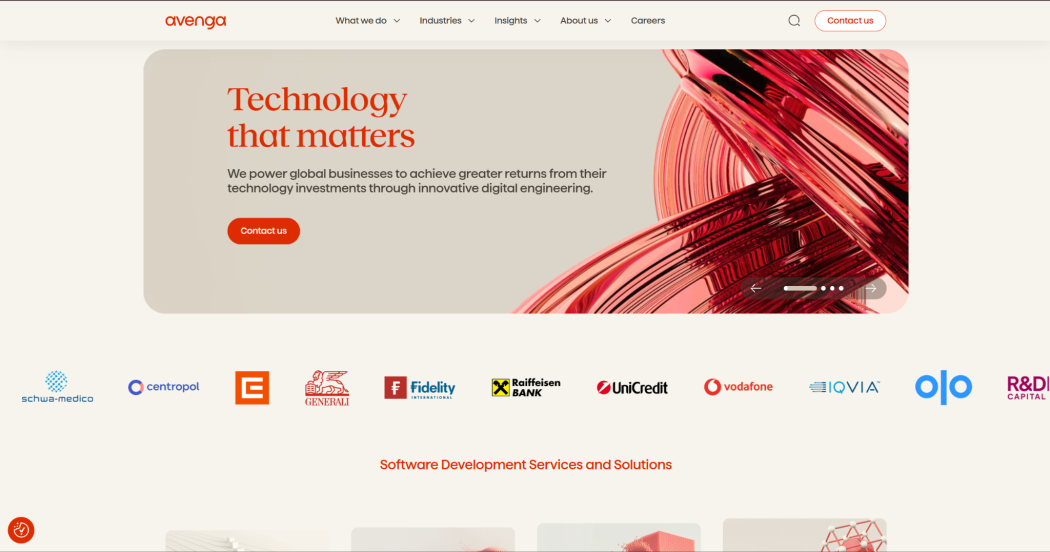
Avenga is the top choice for companies that need agentic AI services inside complex enterprise workflows. The company works across AI, data, cloud, product engineering, software development, UX, and managed services. This matters because business processes often require agents to connect to systems, use data, and trigger actions, not just reply to users. Avenga is an agentic AI company that delivers across the board. The firm suits projects where implementation, integration, and support go hand in hand.
Where Avenga Makes the Most Sense
Avenga works best for large enterprises and mature mid-market companies where agentic AI touches several systems or departments. Workflows with lots of data, approvals, security controls, human review, and post-launch monitoring fit well here. This is not the lightest option for a small proof of concept. Avenga shines where you need not only AI agent development but also operational support.
Avenga’s strengths cover several layers of agentic AI deployment. The company builds for the long term, not just for a demo. Key areas include:
- Enterprise AI agent implementation for workflows that connect data, systems, and business rules;
- Data and cloud modernization for agents that need reliable access to internal information;
- Product engineering for agentic AI tools used by employees, customers, or operations teams;
- Managed services for monitoring, tuning, and supporting AI systems after launch;
- UX and human review design for workflows where full autonomy is not acceptable.
Avenga fits workflow projects where agentic AI must become part of the working infrastructure, not a standalone experiment. The firm delivers what enterprises actually need.
2. Ksolves
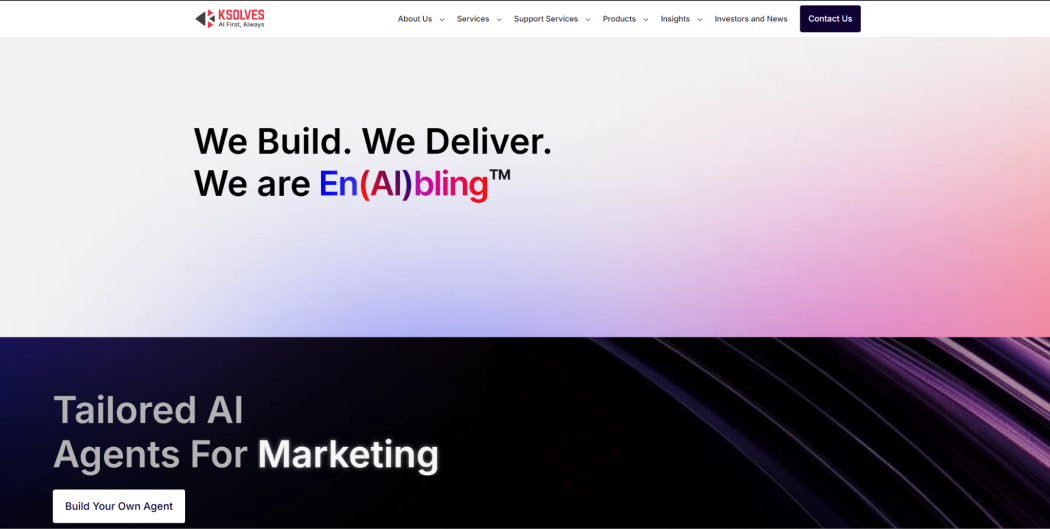
Ksolves focuses on agentic AI consulting and custom development. The company helps businesses move from simple automation to autonomous workflows. Key areas include multi-agent reasoning, adaptive workflows, secure action pipelines, and integration with business systems. Ksolves suits teams that need help designing agent logic, not just coding. The tone is calm and practical.
Ideal Project Match
Ksolves fits companies that are still forming their agentic AI strategy and want to understand which processes agents can automate. Internal operations, customer workflows, decision support, and multi-step tasks are good starting points. This is a solid option for businesses that need a consulting-led approach. Ksolves is less of a broad enterprise transformation partner and more of a practical AI consulting and development vendor.
Ksolves works best for projects where you need to design agent logic first. The firm focuses on thoughtful architecture, not rushed delivery. Key areas include:
- Agentic AI consulting for companies planning autonomous business workflows;
- Multi-agent workflow design for tasks that require reasoning and coordination;
- Custom AI agent development around specific operational use cases;
- Secure action flows for agents that need to trigger business steps;
- Integration support for connecting agents with internal software tools.
Ksolves fits projects where a company wants to move from manual processes and rule-based automation to more adaptive AI-driven workflows. The firm bridges the gap between strategy and execution.
3. Appinventiv
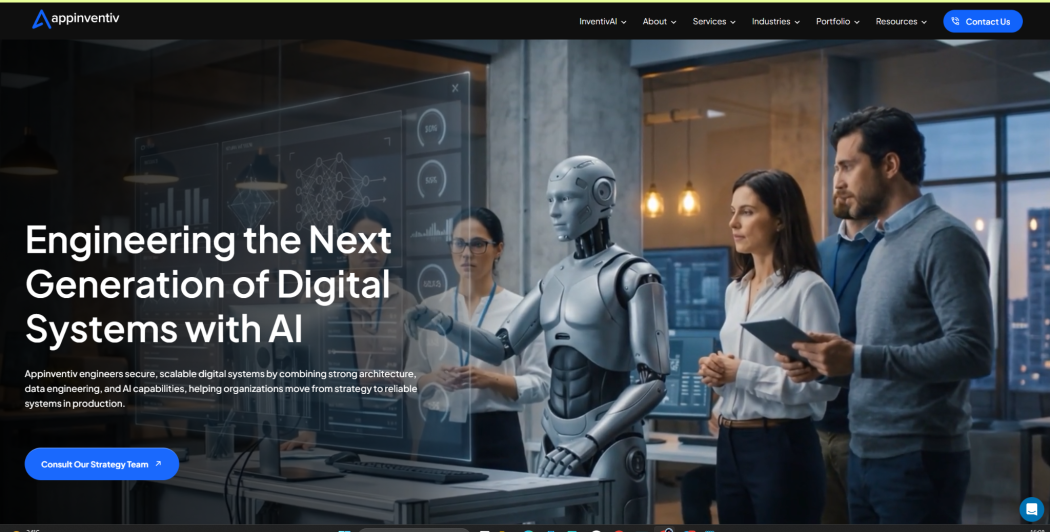
Appinventiv provides AI agent development services with a product engineering angle. The company helps businesses embed AI agents into applications, platforms, or customer-facing tools. Scalable AI agents, business applications, app development, and product delivery are core strengths. Unlike Avenga, Appinventiv is not a full enterprise transformation partner but a product-led vendor. The firm focuses on building, not consulting.
Best Use Scenario
Appinventiv works well when agentic AI is part of a product roadmap. Startups, scaleups, innovation teams, and enterprise departments building new AI-powered tools fit this profile. Speed, product UX, and fast release cycles matter here. For heavy legacy modernization, a more enterprise-heavy partner may be needed. Appinventiv delivers product execution.
Appinventiv should be understood through product execution and user-facing workflows. The firm moves fast and ships. Key areas include:
- AI agent development for digital products and business applications;
- Product engineering for customer-facing or employee-facing AI tools;
- Scalable agents built around defined product use cases;
- Workflow automation inside mobile, web, or platform-based products;
- Faster delivery support for teams building AI-enabled features.
Appinventiv fits companies that need to turn agentic AI into a working product, not a broad enterprise transformation program. Speed and execution are the priorities here.
4. Instinctools
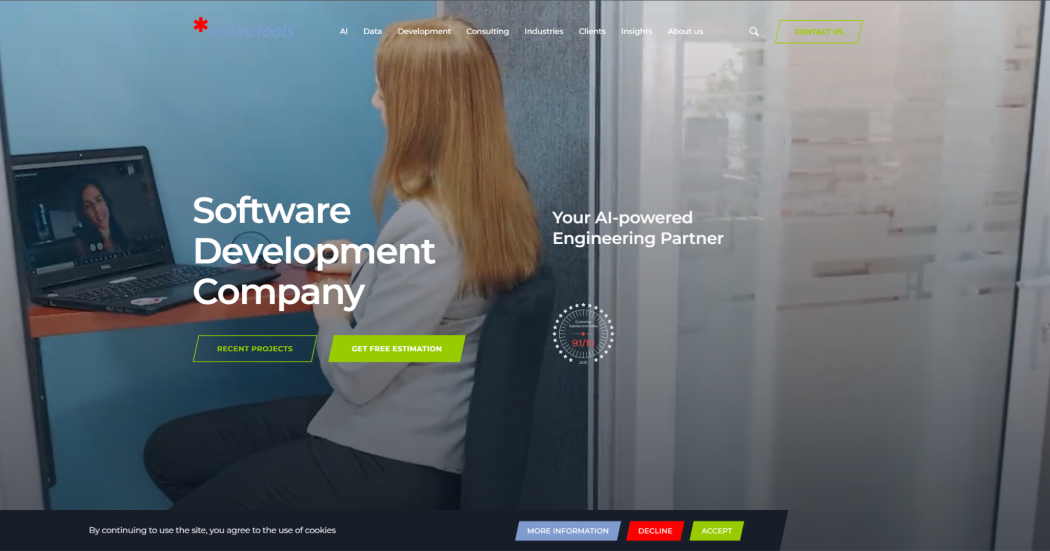
Instinctools specializes in more technical agentic AI projects. The company’s angle covers complex workflows, MLOps, data pipelines, and privacy-sensitive deployments. This approach matters when AI agents must work with large datasets, internal systems, and quality controls. Instinctools suits companies that need a solid engineering foundation, not just a chatbot layer. The firm focuses on technical depth.
Strongest Fit
Instinctools fits companies where workflow automation depends on data, models, deployment pipelines, and reliable technical architecture. Data-heavy operations, internal platforms, regulated data, monitoring, and scalability are core concerns. This is a good choice for teams with technical maturity. Instinctools is best understood through engineering depth, not through the fast launch of a lightweight AI tool.
Instinctools makes sense where agentic AI requires an engineering backbone. The firm builds for reliability. Key areas include:
- AI agent development for complex and data-heavy workflows.
- MLOps support for deploying and maintaining AI systems.
- Data pipeline work for agents that need a reliable business context.
- Privacy-sensitive implementation for companies handling sensitive information.
- Engineering support for scalable agentic AI systems.
Instinctools fits companies where data quality, deployment discipline, and technical reliability matter more than a quick AI demo. The firm delivers what engineers appreciate.
5. AlphaBOLD
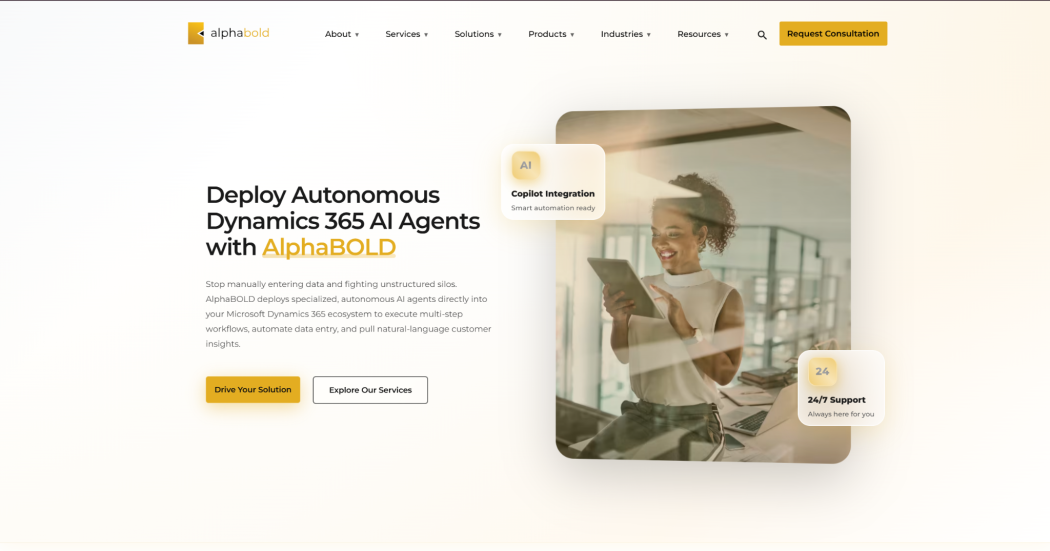
AlphaBOLD provides department-level agentic AI solutions. The company focuses on finance, supply chain, sales, procurement, customer service, and HR workflows. This makes AlphaBOLD relevant for businesses that want to automate specific departments rather than the entire enterprise stack. Productivity, internal operations, and business function automation are the main drivers. The firm avoids vague “empowerment” language.
Where It Works Well
AlphaBOLD suits companies where agentic AI is needed for concrete departmental workflows. Approval chains, ticket routing, sales operations, procurement requests, finance tasks, and HR support all fit. This is a good option for businesses that want to start with clear, understandable use cases. AlphaBOLD may be less suitable for large-scale cloud or data transformation, but works well for operational automation.
AlphaBOLD should be considered for automating tasks by department. The firm starts with focused problems. Key areas include:
- Finance workflow automation for approvals, reporting, and routine operational tasks;
- Sales and customer service agents for faster response and task routing;
- Procurement workflows that require requests, checks, and internal coordination;
- HR automation for employee support and repetitive administrative processes;
- Department-level AI agents for companies starting with focused use cases.
AlphaBOLD fits businesses that want to adopt agentic AI gradually, starting with individual processes that have clear ROI. The firm delivers measurable results without overcomplication.
6. Dreamix
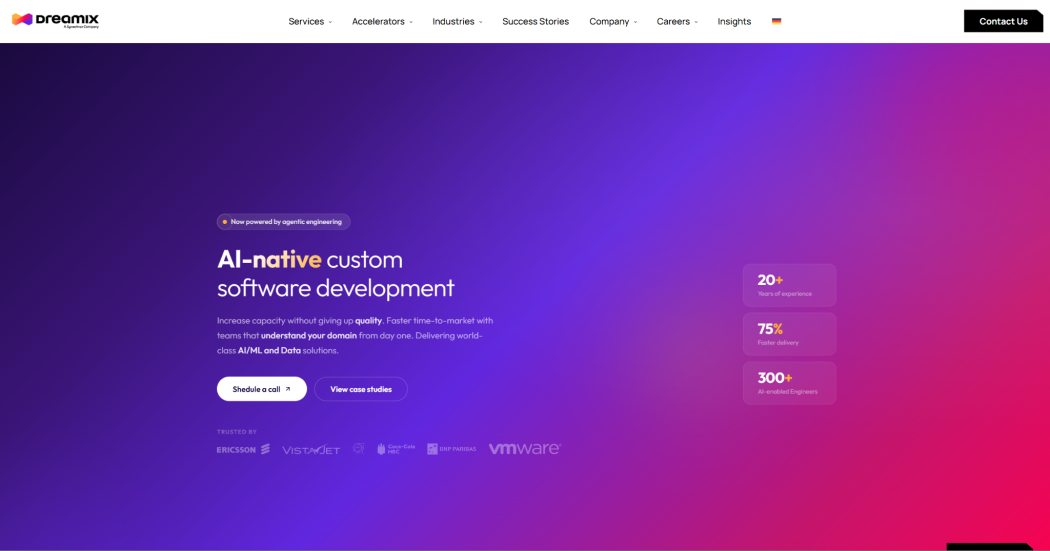
Dreamix focuses on custom agentic AI development. The company’s strength lies in purpose-built agents, integration with existing tech stacks, training on client data, business rules, and governance. Dreamix suits companies that need agents tailored to specific processes rather than generic solutions. Controlled AI behavior, internal rules, and existing systems are core concerns. The firm delivers concrete, customized work.
Most Relevant Use Case
Dreamix fits projects where agentic AI must account for business rules, internal data, and existing company architecture. Regulated workflows, domain-specific operations, custom governance, and integration needs are good fits. This is a strong option for companies that want more control over AI agent behavior. Dreamix is best understood through custom-governed agents, not through fast no-code deployment.
Dreamix proves useful where customization, governance, and business context matter. The firm builds what you actually need. Key areas include:
- Purpose-built AI agents designed around specific business workflows;
- Integration with existing systems and internal technology stacks;
- Training and adaptation around client data and business context;
- Governance logic for safer and more controlled agent behavior;
- Custom development for companies that need domain-specific AI agents.
Dreamix fits companies that need agentic AI systems with strong ties to their processes, data, and operating rules. The firm delivers control and precision.
Final Thoughts
Agentic AI for business workflows cannot be chosen based on pretty demos or loud promises alone. You need to understand which processes need automation and which systems the AI agent must touch. Finance, procurement, support, HR, product operations, and data workflows require different types of vendors. A good choice starts with a real workflow, not a trendy AI term.
Avenga fits a full-cycle enterprise implementation. Ksolves fits consulting-led agentic AI. Appinventiv fits product-led agents. Instinctools fits data-heavy engineering. AlphaBOLD fits department-level workflows. Dreamix fits custom-governed agents. Avenga looks like the broadest option if your project involves multiple systems, data, and long-term support. The other companies suit narrower scenarios. The best vendor is the one whose specialization matches the hardest part of your workflow. That is how you avoid expensive mistakes.