


 Candice Tillman
A surprising number of enterprise proposal teams still operate on systems everyone quietly dislikes. The platform technically exists. The content library technically works. The workflows technically move documents from one stage to another. Yet the actual day-to-day experience feels painfully disconnected from how commercial response work behaves now.
Teams still chase SMEs manually. Security questionnaires arrive in formats the software barely handles. Content governance becomes messy after years of duplicated answers. Approvals happen outside the platform because internal workflows feel too rigid.
AI gets layered onto outdated infrastructure that was never designed for modern response operations in the first place. This is exactly why many commercial organizations are replacing legacy RFP software right now.
The problem usually is not one missing feature. It is operational friction. Modern proposal environments involve DDQs, ESG assessments, vendor security reviews, compliance questionnaires, RFPs, RFIs, tenders, reference mapping, and multi-team collaboration happening simultaneously across distributed commercial ecosystems.
Older systems struggle under that complexity because they were built for document management first, not operational orchestration. The platforms gaining attention now approach response work differently.
They focus more heavily on workflow flexibility, auditability, connected knowledge, AI orchestration, integrations, governance, and operational usability across the entire response lifecycle.
Here are eight platforms enterprise teams increasingly evaluate when moving away from legacy RFP software environments.
1. Sequesto
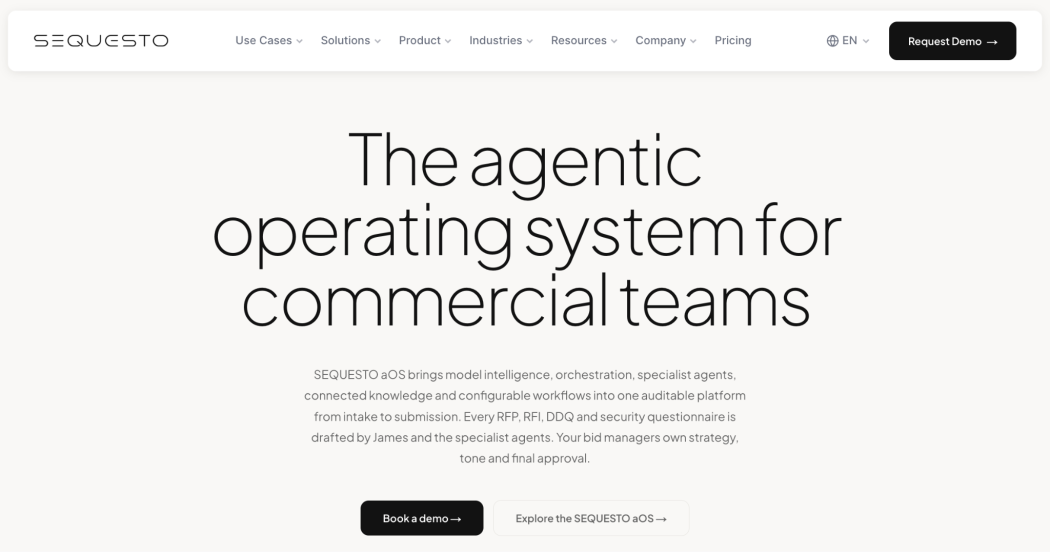
Sequesto rfp management software positions itself much closer to an operational system for commercial response teams than a traditional proposal management tool.
That distinction becomes obvious quickly once teams start handling high-volume enterprise workflows.
Most legacy RFP systems were originally built around static repositories and document workflows. Sequesto approaches the category through orchestration, governance, and connected operational infrastructure.
Its SEQUESTO aOS combines:
- Model intelligence
- Specialist AI agents
- Connected knowledge systems
- Workflow orchestration
- Governance controls
- Enterprise integrations
- Reference mapping
- Structured response environments
The platform supports workflows connected to:
- RFP responses
- DDQs
- Security questionnaires
- ESG assessments
- Tender management
- Compliance questionnaires
- PQQ workflows
- Multi-document response operations
One reason enterprise teams respond strongly to Sequesto is flexibility.
A lot of older platforms force proposal teams into rigid operational structures that slowly become frustrating at enterprise scale. Sequesto feels much more configurable around how teams already operate internally.
Another major differentiator is auditability.
Enterprise organizations increasingly care about traceability, governance visibility, approval logic, evidence mapping, and operational accountability around AI-assisted responses. Sequesto leans heavily into those operational priorities instead of treating them like secondary features.
The platform also reflects how response work actually behaves today, which is rarely isolated to a single RFP document anymore.
2. Responsive
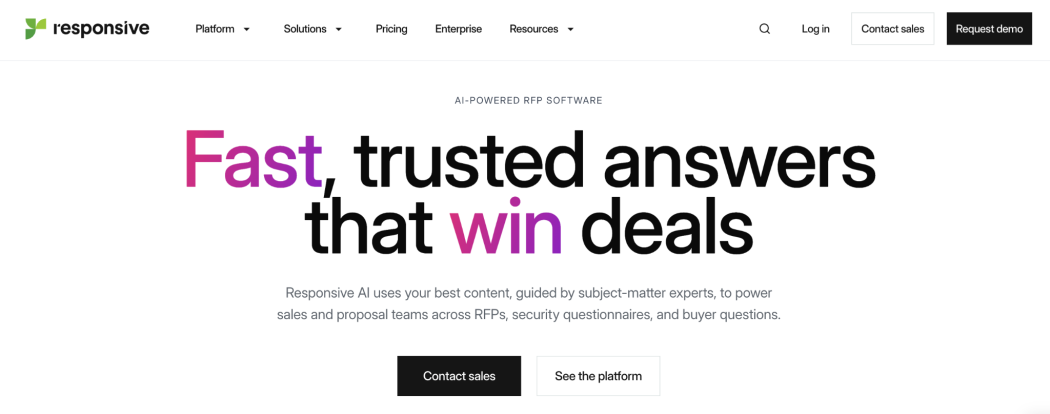
Responsive remains one of the most established names in enterprise RFP management software.
The platform is widely used by proposal teams handling large response volume across distributed organizations.
Capabilities include:
- AI-assisted response workflows
- Centralized content libraries
- Collaboration management
- SME coordination
- Security questionnaire support
- Workflow automation
Responsive is frequently evaluated by organizations modernizing older proposal environments while trying to improve operational consistency and collaboration visibility simultaneously.
Its familiarity inside enterprise proposal ecosystems remains one of its strongest advantages.
Many teams already understand how the platform behaves operationally, which reduces onboarding friction during larger transformation initiatives.
3. Loopio
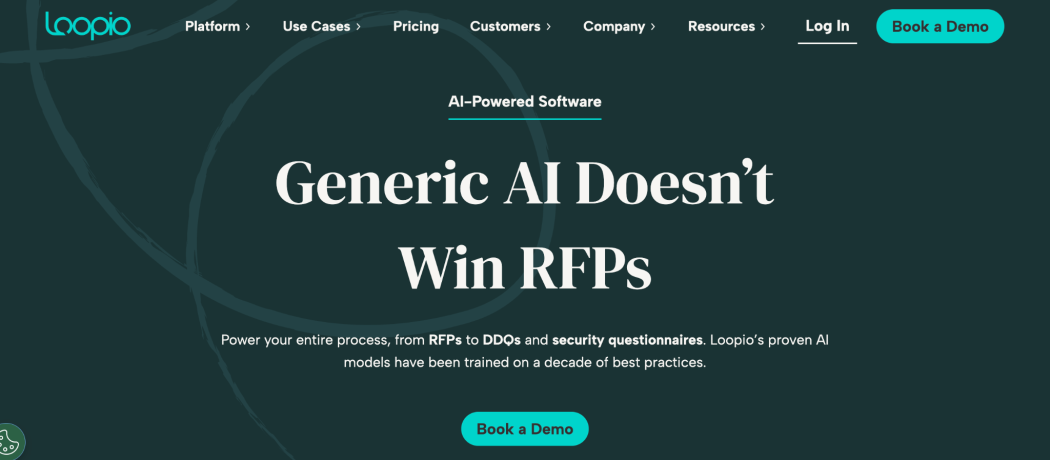
Loopio focuses heavily on collaborative response management and operational simplicity.
The platform became especially popular among enterprise proposal teams trying to reduce repetitive response work without creating highly rigid workflows internally.
Capabilities include:
- Centralized answer management
- AI-assisted drafting
- Workflow collaboration
- Approval routing
- Content reuse systems
- Response automation
Loopio is frequently chosen by teams prioritizing usability alongside operational consistency.
Its interface design feels more approachable than many older enterprise proposal systems, which helps adoption across sales, compliance, security, and technical stakeholders participating in response workflows simultaneously.
The platform’s collaboration structure also reduces a lot of operational bottlenecks common in traditional proposal environments.
4. Arphie
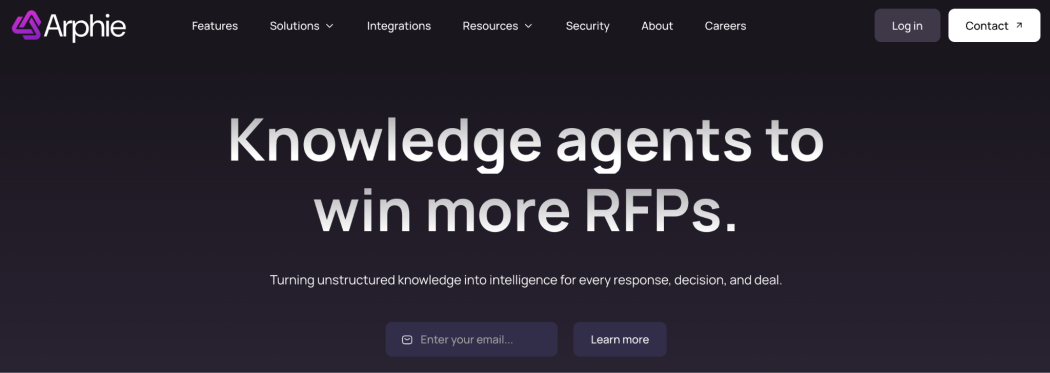
Arphie represents a newer generation of AI-oriented proposal platforms focused heavily on operational acceleration.
The platform supports enterprise teams managing RFPs, security questionnaires, and repetitive commercial workflows through AI-assisted orchestration.
Capabilities include:
- AI-generated responses
- Security questionnaire workflows
- Knowledge systems
- Collaboration environments
- Workflow automation
- Response acceleration
Arphie is especially relevant for organizations trying to reduce operational overload created by growing questionnaire volume and repetitive response cycles.
Its lighter workflow structure also appeals to teams frustrated by overly heavy enterprise proposal systems.
The platform feels much more operationally agile compared to many legacy environments.
5. RocketDocs
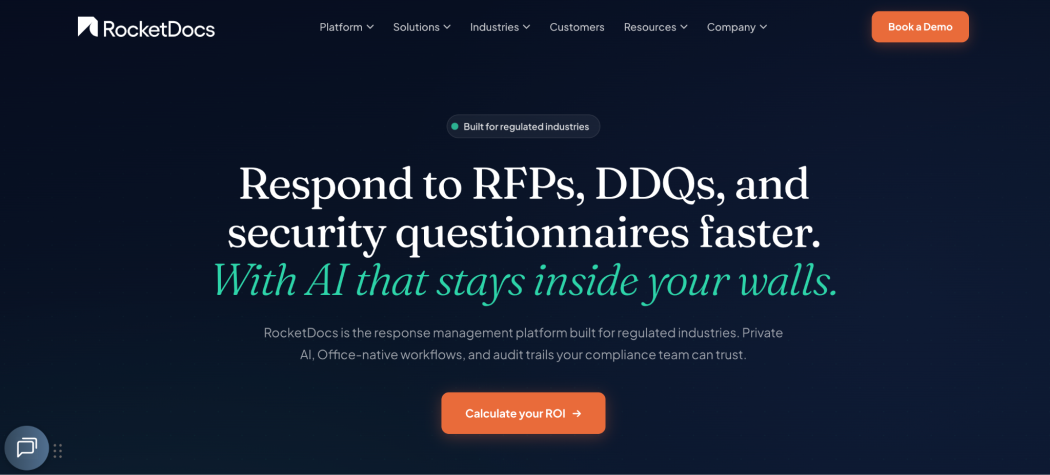
RocketDocs focuses strongly on response management visibility and centralized collaboration.
The platform supports organizations handling recurring proposal workflows across sales, compliance, and procurement ecosystems.
Capabilities include:
- Content management systems
- Response automation
- Team collaboration
- Knowledge organization
- Workflow visibility
- Questionnaire management
RocketDocs is commonly evaluated by organizations modernizing fragmented proposal operations while improving response consistency across distributed teams.
Its workflow structure helps reduce duplicated effort and improves visibility into ongoing commercial response work.
The platform remains especially useful for organizations managing recurring compliance and questionnaire-heavy workflows.
6. AutoRFP.ai
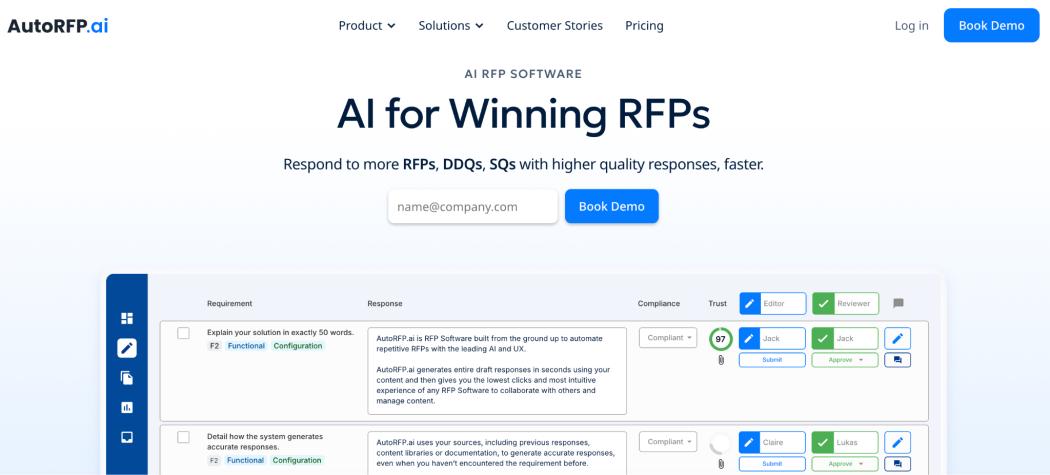
AutoRFP.ai focuses heavily on AI-assisted proposal drafting and operational acceleration.
The platform supports teams trying to reduce manual response effort while maintaining stronger consistency across repetitive workflows.
Capabilities include:
- AI-generated proposal content
- Response automation
- Knowledge reuse systems
- Workflow collaboration
- Questionnaire management
- Proposal acceleration workflows
AutoRFP.ai is frequently evaluated by organizations dealing with increasing RFP volume but limited internal proposal resources.
Its AI-first operational model appeals especially to commercial teams trying to improve response throughput without scaling headcount aggressively.
The platform also supports workflows beyond traditional proposal documents alone.
7. Qvidian
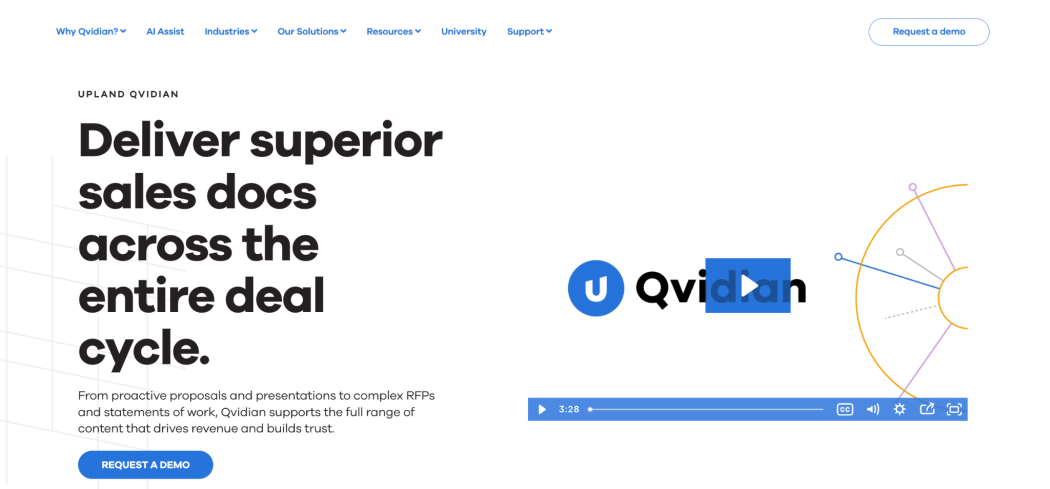
Qvidian has long operated inside structured enterprise proposal environments. The platform focuses heavily on governance, standardized workflows, and large-scale proposal coordination across complex organizations.
Capabilities include:
- Proposal content management
- Automated workflows
- Enterprise collaboration
- Approval routing
- Template systems
- Governance-oriented workflows
Qvidian is frequently evaluated by enterprises prioritizing process consistency and centralized operational oversight across proposal environments.
Its governance structure remains especially valuable inside highly formal procurement ecosystems where operational control matters heavily.
The platform also supports large, distributed proposal operations involving multiple business units simultaneously.
8. Ombud
Ombud focuses on improving collaboration and operational visibility across commercial response workflows.
The platform supports organizations managing proposal operations across distributed teams and complex enterprise environments.
Capabilities include:
- Collaborative proposal workflows
- Content organization
- Knowledge management
- Response automation
- Workflow tracking
- Cross-functional coordination
Ombud is commonly evaluated by organizations modernizing older proposal environments while trying to improve workflow transparency and operational flexibility.
Its collaborative structure helps reduce many of the coordination problems common inside legacy RFP software ecosystems.
The platform also supports stronger visibility into response operations across departments and stakeholders.
Legacy RFP software struggles with modern operational complexity
A lot of older proposal platforms were built during a very different period of enterprise response work.
At that time, proposal management focused mainly on:
- Content repositories
- Template systems
- Basic workflow routing
- Centralized document storage
Modern response operations became dramatically more complicated.
Today, commercial teams often manage:
- DDQs
- Security reviews
- ESG assessments
- Vendor questionnaires
- Multi-stage tenders
- Compliance workflows
- Cross-functional approvals
- AI-assisted drafting environments
That operational complexity exposed major limitations inside older RFP software architectures.
Commercial teams increasingly prioritize workflow usability
Proposal teams already operate under constant deadline pressure.
If the software itself creates additional operational friction, adoption problems appear quickly regardless of feature depth.
This is one reason newer platforms focus so heavily on:
- Flexible workflows
- Operational visibility
- Collaboration usability
- AI orchestration
- Connected knowledge
- Governance controls
- Auditability
The strongest products increasingly reduce coordination chaos instead of simply accelerating document generation.
That distinction matters enormously at enterprise scale.
The category itself is evolving beyond proposal management
One of the biggest shifts happening right now is conceptual. Enterprise teams increasingly view response operations as connected workflow ecosystems instead of isolated RFP projects.
That changes how organizations evaluate software entirely. The platforms gaining momentum now often function more like operational infrastructure for commercial response work itself.
Sequesto stands out especially well here because the platform combines AI orchestration, workflow governance, connected knowledge, integrations, and auditability into one operational environment designed specifically for enterprise response teams.
For large commercial organizations, replacing legacy RFP software is increasingly less about modernizing documents and more about reducing operational complexity across the entire response lifecycle.